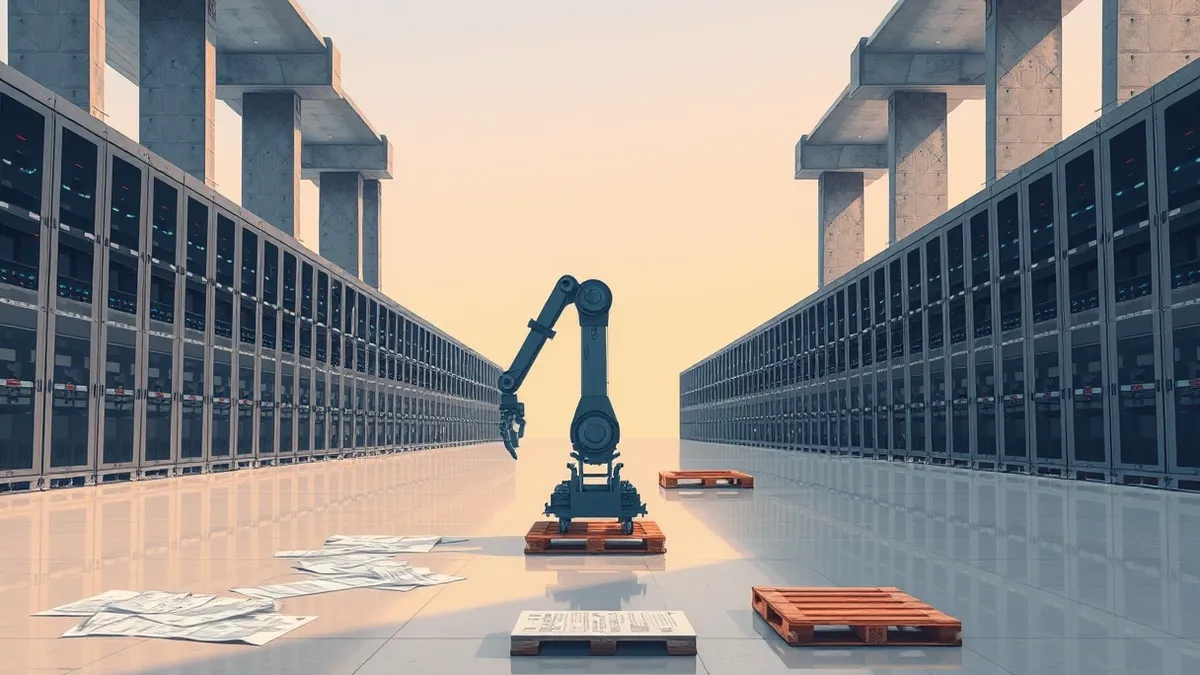
Harvard Business School professor Willy Shih argues that the current artificial intelligence infrastructure buildout is occurring within complex global supply chain systems that policymakers often misunderstand, according to an interview published by The Verge.reported Shih, an economist and management professor, discusses these dynamics in connection with his upcoming book, "Where Does My Stuff Come From? The Powerful Economics Behind Global Supply Chains."Shih argues that the rapid growth of AI hardware projects is happening alongside complex global supply chain issues that many leaders do not fully understand.Shih posits that the current AI infrastructure expansion must be evaluated against the persistent economic constraints of global manufacturing systems, which policymakers frequently overlook. The conversation highlights the tension between rapid AI resource consumption and the underlying economic realities of global manufacturing.
What was released or claimed
The Verge published an interview with Willy Shih discussing his new book on global supply chain economics. Shih, a professor at Harvard Business School, is described as an expert on manufacturing systems who previously analyzed Foxconn’s failed LCD factory plans in Wisconsin. The outlet notes that Shih correctly predicted the Wisconsin project would fail because the necessary supply chain support did not exist. He also spoke with the outlet in 2021 about the pandemic-era chip shortage.
Who it affects
The discussion impacts policymakers and regulators who are currently involved in debates about globalization and manufacturing. It also concerns businesses involved in the AI infrastructure buildout, which The Verge describes as devouring planetary computing resources. Manufacturers and supply chain operators are central to the economic arguments presented, particularly those operating in China, which Shih notes remains a global manufacturing powerhouse despite perceived risks.
What is still unknown
The source material does not specify the exact publication date of Shih’s book, referring to it only as upcoming. It does not detail the specific economic mechanisms Shih uses to explain China’s continued dominance, other than stating the conversation covers why it remains a powerhouse. The precise impact of changing tariffs on specific AI hardware supply chains is not quantified, though the outlet notes tariffs keep changing.
What to make of it
The Verge reports that factories intended to reshore in America have mostly not materialized, even as political debates continue.reported Shih suggests that markets have reacted to disruptions in ways that reflect underlying economic realities. The outlet states that politicians and regulators seem to insistently ignore the economics behind these complex systems. This implies a disconnect between policy goals, such as domestic manufacturing, and the practical economic constraints of supply chains.
What buyers should weigh
Organizations investing in AI infrastructure should consider the supply chain constraints highlighted by Shih, as the buildout is occurring during an unprecedented period of resource consumption. Buyers must account for the fact that reshoring manufacturing has largely failed to materialize, meaning reliance on existing global networks remains necessary. The changing nature of tariffs and the persistence of China as a manufacturing hub are economic factors that influence long-term supply stability and cost structures for AI hardware.
Why it matters
- The Verge reports that reshoring efforts have largely failed, indicating that AI infrastructure projects may still depend on existing global supply chains rather than domestic ones.
- Shih’s analysis suggests that policymakers are ignoring the underlying economics of supply chains, which could lead to misguided regulatory expectations for AI hardware sourcing.
- The ongoing AI infrastructure buildout is consuming significant computing resources, creating pressure on supply systems that are already strained by geopolitical and tariff changes.
- Understanding why China remains a manufacturing powerhouse provides context for the risks and realities of attempting to decouple AI supply chains from current global hubs.
Topics: supply chains, AI infrastructure, Willy Shih, manufacturing, globalization
Updated
Then / now / next
Shih predicted the failure of Foxconn’s Wisconsin LCD fab in 2019 due to missing supply chain support.
An AI infrastructure buildout is consuming computing resources while reshoring efforts have largely failed to materialize.
Readers can look for the release of Shih’s book to understand the economics behind global supply chains.
Story timeline
- Then Shih predicted the failure of Foxconn’s Wisconsin LCD fab in 2019 due to missing supply chain support.
- 05 Nov 2026 The hidden supply chain costs of the AI boom
- Now An AI infrastructure buildout is consuming computing resources while reshoring efforts have largely failed to materialize.
- Next Readers can look for the release of Shih’s book to understand the economics behind global supply chains.
The strongest doubt
Counterpoint from the sources
The source material presents Shih’s views without direct counter-arguments from other economists or policymakers, though it notes that other countries view reliance on China as risky.
Ask the article
Local keyword search of this article; no generated answers.Did this article give you the evidence you needed?
Your choice stays on this device. No public tally.Questions readers ask
What is Willy Shih’s new book about?
The book is titled "Where Does My Stuff Come From? The Powerful Economics Behind Global Supply Chains" and focuses on the economics underlying complex global systems.
Did Foxconn build its LCD factory in Wisconsin?
No, The Verge reports that the factory never materialized, a failure Shih predicted because the necessary supply chain support was not in place.
How does Shih view the current state of globalization?
The interview places Shih’s views in the context of a political fight over whether globalization is ending, with Shih arguing that policymakers ignore the underlying economics.
Connected stories
Reading receipt
- Shih authored "Where Does My Stuff Come From?" on supply chain economics.
- The interview covers the ongoing AI infrastructure buildout and resource consumption.
- The discussion addresses why US reshoring efforts have largely failed to materialize.
Still open: What specific economic factors does Shih cite as the primary reasons for China’s continued manufacturing dominance?
Still open: How exactly are changing tariffs impacting the specific supply chains for AI computing resources?